漢清講堂227 《喬治‧ 桑與福樓拜 》 2018-0509。 喬治桑在她的信中曾恰如其分地回應道:“真正了解我的人會讀懂我的真面目:我為美所傾倒,渴望真理,心地極其敏感,判斷力卻很薄弱,常常顯得滑稽可笑,但始終坦誠忠誠,從不心胸狹隘或心 ( “Someone who knew me deeply would read me as I am: taken with beauty, hungry for truth, very sensitive of heart, very weak of judgment, often ridiculous, always open and loyal, never small-minded or bitter, angry a great deal, and, thank God, completely oblivious to evil sayings and nasty people.” ) BECOMING GEORGE: The Invention of George Sand | By Fiona Sampson | Norton
Delacroix 日記 1853.11.28,pp.273~74
對喬治‧ 桑作品/劇的最好評論;喬治‧ 桑 自己搞不清楚。她的作品不對法國人口味;也無法傳世。
我對德國、法國出版全集的努力,都很佩服。德國如音樂家韓德爾的。法國的,漢清講堂介紹過。
George Sand (20卷1990)與 Gustave Flaubert 兩人都是寫信高手。
Gustave Flaubert 的創作過程中的苦心等,都在信件找得到,譬如Vladimir Nabokov 在Lectures on Literature談Madame Bovary.
George Sand 的書信"數萬頁"(65歲:每天平均寫12封信;希望去的星球不知讀書寫信),編集、出版花百年以上。
http://hclectures.blogspot.com/....../201859-george......管理
HCLECTURES.BLOGSPOT.COM
《喬治‧ 桑與福樓拜 》The George Sand–Gustave Flaubert Letters.…
George Sand and Gustave Flaubert
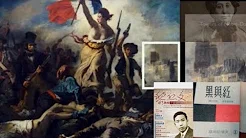
38:52
227 《喬治‧ 桑與福樓拜 》 2018-0509 漢清講堂
https://www.youtube.com/watch?v=xdUyKDF71qo
George Sand、1804年7月1日 – 1876年6月8日可參考蕭邦傳記
蕭邦在巴黎 Chopin in Paris: The Life and Times of the R...
喬治桑,🇫🇷作家與女性主義先驅,與#蕭邦維持長達九年的伴侶關係,也是他最長久的一段感情。1836年前後,他們在#巴黎相遇,蕭邦拒絕先前與他人的婚約才能和她廝守。
時光荏苒,炙熱的愛情昇華成深厚的友誼。即便後來他的健康逐漸惡化,喬治桑依然不離不棄的悉心照顧與關懷。
想知道更多嗎? 歡迎參觀線上蕭邦展:
更詳細的交往資料,參考索引項中的"George Sand"、"Nohant"、Chopin"等:
有好幾年,Delacroix夏天常去 Nohant住一個月,直到 喬治‧ 桑與蕭邦分手1849 後......
Delacroix: A Life: Timothy Wilson-Smith: 9780094712706: Amazon ...
https://www.amazon.com/Delacroix-Life...Wilson-Smith/.../009471
Delacroix: A Life [Timothy Wilson-Smith] on Amazon.com. *FREE* shipping on qualifying offers. This biography of the French Romantic artist Eugene Delacroix (****
Gender, performance and George Sand


Nohant en automne
Nohant en automne... Photos sur plusieurs automnes, photos ancienne
****
6.28 介紹喬治‧ 桑母子(Maurice) 共同出書 (居住區/省Berry的民間傳說集):當然Maurice 插畫。喬治‧ 桑寫給其子的感謝信如附:
Always be wary of the water that sleeps ...
In 1858, George Sand and his son combined their talents to publish an illustrated book: The Rustic Legends. The novelist-ethnographer brings into contextualizing, twelve of the most vivid legends in the Black Valley, his son made charcoal drawings imagining stories.
The original drawings of Maurice are kept in Nohant, six of them adorn for a long time the walls of the dining room, including that of the "Grandes demoiselles" ...
These ghosts with the appearance of a woman, prowl in the forests, feed on the fogs present around the stagnant water points and steal the people they meet ...
Maurice and his mother had already worked together on this theme, a few years earlier: George Sand had published in the magazine l'Illustration, texts illustrated by Maurice, offering an anthology of Berry legend.
In the original edition of this book _numerized by the BNF, visible on Gallica: thank you Gallica! _, A letter from George Sand addressed to Maurice serves as foreword, the autograph has unfortunately disappeared ...:
"Nohant, August 1, 1858.
My dear son, you have collected various traditions, songs and legends, which you have done well, to illustrate; for these things are lost as the peasant becomes enlightened, and it is good to save from oblivion which is moving quickly, some versions of this great poem of the marvelous, of which humanity has been nourished for so long, and of which the country people are today, without their knowledge, the last bards.
I therefore want to help you to collect some scattered fragments of these rustic legends, the bottom of which is found almost in all France, but to which each locality has given its particular color and the stamp of its fantasy. "
Engraving of the drawing of Maurice des Grandes demoiselles for the edition of Le Légendes Rustiques of 1858, cover page and foreword of the book; photo of Maurice by Nadar in 1866 (Gallica).
Toujours se méfier de l'eau qui dort...
En 1858, George Sand et son fils allient leurs talent pour faire publier un ouvrage illustré : Les Légendes rustiques. La romancière-ethnographe y rapporte en les contextualisant, douze des légendes les plus vivaces en Vallée Noire, son fils ayant fait au fusain les dessins imageant les histoires.
Les dessins originaux de Maurice sont conservés à Nohant, six d'entre eux ornent depuis très longtemps les murs de la salle à manger, dont celui des "Grandes demoiselles"...
Ces fantômes aux apparences de femme, rôdent dans les forêts, se nourrissent des brouillards présents autour des points d'eau croupie et volent les personnes qu'elles rencontrent...
Maurice et sa mère avaient déjà travaillé ensemble sur cette thématique, quelques années auparavant : George Sand avait fait publié dans la revue l'Illustration, des textes illustrés par Maurice, offrant un florilège des légendes berrichonnes.
Dans l'édition originale de cet ouvrage _numérisé par la BNF, visible donc sur Gallica : merci Gallica !_, une lettre de George Sand adressée à Maurice sert d'avant-propos, l'autographe a malheureusement disparu... :
"Nohant, le 1er août 1858.
Mo cher fils, tu as recueilli diverses traditions, chansons et légendes, que tu as bien fait selon moi, d'illustrer ; car ces choses se perdent à mesure que le paysan s'éclaire, et il est bon de sauver de l'oubli qui marche vite, quelques versions de ce grand poème du merveilleux, dont l'humanité s'est nourrie si longtemps, et dont les gens de campagne sont aujourd'hui, à leur insu, les derniers bardes.
Je veux donc t'aider à rassembler quelques fragments épars de ces légendes rustiques, dont le fond se retrouve à peu près dans toute la France, mais auxquelles chaque localité a donné sa couleur particulière et le cachet de sa fantaisie."
Gravure du dessin de Maurice des Grandes demoiselles pour l'édition des Légendes rustiques de 1858, page de couverture et avant-propos de l'ouvrage ; photo de Maurice par Nadar en 1866 (Gallica).


***
A few days after their installation in this place outside the world and out of time, Chopin writes the following letter to Julien Fontana, a friend of youth established in Paris, to deliver his impressions ...
Frédéric Chopin to Julien Fontana, at the Carthusian monastery of Valldemossa, December 28, 1839 (Correspondence of Frédéric Chopin, volume n ° 2):
"You can imagine me between the rocks and the sea, in a cell of an immense Carthusian with doors bigger than any door of Paris. I'm here without crimps or white gloves, and pale as usual.
My cell, shaped like a large coffin, has a huge dusty vault, a little window overlooking the orange trees, the palm trees, the cypresses of the garden. Facing the window, under a filigree rosette of Moorish style, a strap bed ...
Silence ... We can shout ... silence again. In a word, I write to you from a very strange place ...
You say that you sent me a letter from mine. I did not see anything, nor received. And yet, she would be so necessary to me ... "
Portrait of Chopin in Dante, by Delacroix (Delacroix Museum in Paris); photos of Valldemossa in the 1930s and the cell garden of the monastery, engraving after a drawing by Maurice Sand (Gallica).
A la fin de l’année 1838, George Sand emmène ses enfants et Frédéric Chopin sur l’île de Majorque. Après avoir eu beaucoup de mal à se loger décemment dans les environs de Palma, ils s’installent finalement à la mi-décembre au sein d’un monastère quasi déserté, situé dans un environnement montagneux et exotique : le village de Valldemossa.
Quelques jours après leur installation au sein de cet endroit hors du monde et hors du temps, Chopin écrit la lettre suivante à Julien Fontana, un ami de jeunesse établi à Paris, pour lui livrer ses impressions…
Quelques jours après leur installation au sein de cet endroit hors du monde et hors du temps, Chopin écrit la lettre suivante à Julien Fontana, un ami de jeunesse établi à Paris, pour lui livrer ses impressions…
Frédéric Chopin à Julien Fontana, à la chartreuse de Valldemossa, le 28 décembre 1839 (Correspondance de Frédéric Chopin, volume n°2) :
« Tu peux m’imaginer entre les rochers et la mer, dans une cellule d’une immense chartreuse aux portes plus grandes qu’aucune porte cochère de Paris. Je suis là sans frisures, ni gants blancs, et pâle comme à l’ordinaire.
Ma cellule, en forme de grand cercueil, a une énorme voûte poussiéreuse, une petite fenêtre donnant sur les orangers, les palmiers, les cyprès du jardin. Face à la fenêtre, sous une rosace filigranée de style mauresque, un lit de sangle…
Silence… On peut crier… silence encore. En un mot, je t’écris d’un endroit bien étrange…
Tu dis m’avoir fait suivre une lettre des miens. Je n’ai rien vu, ni reçu. Et pourtant, elle me serait si nécessaire… ».
Portrait de Chopin en Dante, par Delacroix (Musée Delacroix à Paris) ; photos de Valldemossa dans les années 1930 et le jardin des cellules du monastère, gravure d'après un dessin de Maurice Sand (Gallica).


這篇是說喬治‧ 桑訪問福樓拜家時,仍然急著要去愛她的孫女 (名字與喬治‧ 桑相同,我在片中默也談她教孫女Iliad By Homer.....
"Have to hurry to love!"
George Sand at Flaubert, August 6, 1867, Aurore was then 18 months ... (Volume 20 of the Correspondence George Sand by Georges Lubin).
"When I see the harm that my old man gives himself to make a novel, it discourages me with my ease, and I tell myself that I'm doing tidy literature." I finished Cadio, he's been in the paws for a long time Buloz: I'm doing another machine *, but I can not see it clearly yet, what to do without sun and without heat?
Now I should be in Paris, see the exhibition at my ease and walk your mother with you. But you have to work well since I only have that to live. And then the children! This Aurora is a marvel. You must see it well, I will not see it for a long time, I do not think myself destined to make old bones: I must hurry to love! "
* We propose the following translation (...): "on the sly" ???
** George Sand started a new novel titled Miss Merquem.
Photo of Aurore in 1867 or 1868 by Bizard, photographer in Saint-Amand-Montrond (reproduced in the work of Claude Malécot, George Sand Félix Nadar).

"Faut se dépêcher d'aimer !"
George Sand à Flaubert, le 6 août 1867, Aurore avait alors 18 mois... (Tome 20 de la Correspondance de George Sand par Georges Lubin).
"Quand je vois le mal que mon vieux se donne pour faire un roman, ça me décourage de ma facilité, et je me dis que je fais de la littérature savetée*. J'ai fini Cadio, il est depuis longtemps dans les pattes de Buloz. Je fais une autre machine*, mais je n'y vois pas encore bien clair, que faire sans soleil et sans chaleur ?
C'est à présent que je devrais être à Paris, revoir l'exposition à mon aise et promener ta mère avec toi. Mais il faut bien travailler puisque je n'ai plus que ça pour vivre. Et puis les enfants ! Cette Aurore est une merveille. Il faut bien la voir, je ne la verra peut-être pas longtemps, je ne me crois pas destinée à faire de bien vieux os : faut se dépêcher d'aimer !"
C'est à présent que je devrais être à Paris, revoir l'exposition à mon aise et promener ta mère avec toi. Mais il faut bien travailler puisque je n'ai plus que ça pour vivre. Et puis les enfants ! Cette Aurore est une merveille. Il faut bien la voir, je ne la verra peut-être pas longtemps, je ne me crois pas destinée à faire de bien vieux os : faut se dépêcher d'aimer !"
*Nous proposons la traduction suivante (...) : "à la sauvette" ???
**George Sand a commencé un nouveau roman intitulé Mademoiselle Merquem.
**George Sand a commencé un nouveau roman intitulé Mademoiselle Merquem.
Photo d'Aurore en 1867 ou 1868 par Bizard, photographe à Saint-Amand-Montrond (reproduite dans l'ouvrage de Claude Malécot, George Sand Félix Nadar).


****
我在影片中談過 George Sand與大畫家 Delacroix 的故事。
今天的Sand 粉絲頁很可以參考。法文翻譯成英文比較可讀:
During his second stay in Nohant for two weeks during the month of July 1843, Eugène Delacroix took the time to paint a bouquet of flowers in a vase. These flowers, very surely picked in the garden of George Sand, were immortalized by the painter to the delight of the novelist who hurried to frame the canvas to hang on one of the walls of his room. Nohant, as she writes to Delacroix in the following letter.
The work in question, indexed very quickly by the art historians who cataloged the work of Delacroix after his death, bears the title of "Flowers in a vase and fruits". The painting belongs to the collections of the Belvedere Museum in Vienna, Austria. It is exceptionally visible at this moment at the exhibition that the Louvre Museum is offering to Delacroix on the occasion of the 220th anniversary of his birth. George Sand sold this painting in 1864 at the time of the great auction of the painter's works at his death.
Letter from George Sand to Delacroix, written at Nohant November 4, 1843 (Correspondence George Sand by Georges Lubin, Volume 6):
"Dear friend, are you suffering? You have worked too much, you have neglected my hygienic prescriptions, the exercise, the air.If you were with me, braving the cold of the evening, the rain of the day, the mud, the devil of the storm, you would strengthen yourself ...
I am in clogs all day and only come back for dinner. I do not plant a blade of grass without thinking of you, without remembering how you love and how you appreciate the flowers, and how you feel them, and how you understand them and how you paint them. My beautiful vase painted by you is framed. I did not move him in spite of your opinion, because if I put him above me, where I work, I'm forced to give myself a stiff neck to see him. Instead of where he is, I see him from my bed waking up and from my writing table, and from everywhere. This is my focus. There is not a floret, a detail that does not remind me of everything we said while you were at your easel ... ".
Flowers in a vase and fruit, Belvedere Museum, Vienna; portrait of George Sand by Delacroix in 1838, Copenhagen; St. John's wort; the St. John's Wort (recognized in the bouquet ...) of Nohant in 2018 ...
---
My George Sand notebook
At the beginning of the year 1855, to escape Nohant after the dramatic death of Nini _the daughter of Solange, her granddaughter adoree, George Sand accompanied by Maurice and Alexandre Manceau, left for a stay of 2 months in Italy. She had not planned this expense and Manceau participated generously in the expenses of this life-saving trip.
After seeing Rome, they settled for some time in the Roman countryside, in the village of Frascati exactly. They found renting the ground floor of an old patrician villa: Villa Piccolomini, later Villa Lancelloti (still standing!).
George Sand at Solange, Frascati, April 1, 1855 (letter n ° 6622, volume 13 of George Sand's Correspondence by Georges Lubin):
"The country is a beauty of which no story can ever give the idea. Frascati is a tiny town on one of the nipples that form the first Apennines. The place is high enough so that in the garden we see the whole countryside of Rome, and the whole chain of Apennines, from Tuscany to Abruzzo ...
Around us the hills are covered with abandoned villas ..., open to everyone, because there is nothing to fly, and monstrous trees, gushing fountains, rocks, waterfalls can not be carried ... ".
Photo of Lancelloti city (formerly Piccolomini); portraits of George Sand by Thomas Couture (1850) and Manceau by Nadar (1864).
https://moncarnetgeorgesand.fr
Au début de l’année 1855, pour fuir Nohant après la mort dramatique de Nini _la fille de Solange, sa petite-fille adorée_, George Sand accompagnée de Maurice et d’Alexandre Manceau, part pour un séjour de 2 mois en Italie. Elle n’avait pas prévu cette dépense et Manceau participa généreusement aux frais de ce voyage salvateur.
Après avoir vu Rome, ils s’établirent pour quelques temps dans la campagne romaine, au village de Frascati exactement. Ils trouvèrent à louer le rez-de-chaussée d’une ancienne villa patricienne : la villa Piccolomini, devenue plus tard la Villa Lancelloti (toujours debout !).
George Sand à Solange, à Frascati, le 1er avril 1855 (lettre n°6622, tome 13 de la Correspondance de George Sand par Georges Lubin) :
« Le pays est d’une beauté dont aucun récit ne pourra jamais donner l’idée. Frascati est une toute petite ville sur un des mamelons qui forment les premières assises des Apennins. L’endroit est assez élevé pour que de plain-pied dans le jardin nous voyons toute la campagne de Rome, et toute la chaîne des Apennins, de la Toscane aux Abruzzes…
Autour de nous les collines sont couvertes de villas abandonnées…, ouvertes à tout le monde, car il n’y a rien à voler, et les arbres monstrueux, les fontaines jaillissantes, les rochers, les cascades ne peuvent être emportés… ».
Photo de la ville Lancelloti (anciennement Piccolomini) ; portraits de George Sand par Thomas Couture (1850) et Manceau par Nadar (1864).


Lors de son deuxième séjour à Nohant _ long de deux semaines_, durant le mois de juillet 1843, Eugène Delacroix prit le temps de peindre à l'huile un bouquet de fleurs dans un vase. Ces fleurs, très sûrement cueillies dans le jardin de George Sand, ont été immortalisées par le peintre pour le plus grand bonheur de la romancière qui se dépêcha de faire encadrer la toile afin de l'accrocher à l'un des murs de sa chambre à Nohant, comme elle l'écrit à Delacroix dans la lettre qui suit.
L'oeuvre en question, répertoriée très vite par les historiens de l'art qui cataloguèrent l'oeuvre de Delacroix après sa mort, porte le titre de "Fleurs dans un vase et fruits". La toile appartient aux collections du Musée du Belvédère à Vienne en Autriche. Elle est exceptionnellement visible en ce moment-même à l'exposition que le musée du Louvre offre à Delacroix à l'occasion des 220 ans de sa naissance. George Sand a vendu cette toile en 1864 au moment de la grande vente aux enchères des oeuvres du peintre à sa mort.
Lettre de George Sand à Delacroix, écrite à Nohant le 4 novembre 1843 (Correspondance de George Sand par Georges Lubin, tome 6) :
"Cher ami, vous êtes donc souffrant ? Vous avez trop travaillé, vous avez négligé mes prescriptions hygiéniques, l'exercice, l'air. Si vous étiez avec moi, bravant le froid du soir, la pluie de la journée, la boue, le diable de la tempête, vous vous fortifieriez...
Je suis en sabots toute la journée et ne rentre que pour dîner. Je ne plante pas un brin d'herbe sans penser à vous, sans me rappeler comme vous aimez et comme vous appréciez les fleurs, et comme vous les sentez, et comme vous les comprenez et comme vous les peignez. Mon beau vase peint par vous est encadré. Je ne l'ai pas déplacé malgré votre avis, parce que si je le mets au-dessus de moi, à l'endroit où je travaille, je suis forcée de me donner un torticolis pour le voir. Au lieu que là où il est, je le vois de mon lit en m'éveillant et de ma table en écrivant, et de partout. C'est mon point de mire. Il n'y a pas une fleurette, un détail qui ne me rappelle tout ce que nous disions pendant que vous étiez à votre chevalet...".
Je suis en sabots toute la journée et ne rentre que pour dîner. Je ne plante pas un brin d'herbe sans penser à vous, sans me rappeler comme vous aimez et comme vous appréciez les fleurs, et comme vous les sentez, et comme vous les comprenez et comme vous les peignez. Mon beau vase peint par vous est encadré. Je ne l'ai pas déplacé malgré votre avis, parce que si je le mets au-dessus de moi, à l'endroit où je travaille, je suis forcée de me donner un torticolis pour le voir. Au lieu que là où il est, je le vois de mon lit en m'éveillant et de ma table en écrivant, et de partout. C'est mon point de mire. Il n'y a pas une fleurette, un détail qui ne me rappelle tout ce que nous disions pendant que vous étiez à votre chevalet...".
Fleurs dans un vase et fruits, Musée du Belvédère, Vienne ; portrait de George Sand par Delacroix en 1838, Copenhague ; les millepertuis de Nohant ; les millepertuis (reconnus dans le bouquet...) de Nohant en 2018...
在1843年七月1843日的第二次逗留期間, 尤金德拉克花時間在花瓶里畫一束花. 這些花, 很可能是在喬治沙的花園里被發現的, 被畫家留下了最偉大的快樂, 他是一個偉大的小說家, 他急忙把帆布掛在他的臥室牆上, 在他在nohant的一個臥室牆上, 她給德拉瓦德拉寫信. 在信之後
有關工作非常迅速, 在他死後cataloguèrent delacroix工作的藝術歷史學家非常迅速地列出了"花瓶 和 水果 中的 花"的標題, 全帆布屬於奧地利維也納的貝爾維德貝爾博物館收藏. 在這次展覽上, 羅浮宮博物館向delacroix提供了220年的出生, 這是非常明顯的. 喬治·沙在1864年把這幅畫賣了, 當時畫家的作品被偉大的銷售, 他的死亡.
1843年十一月4日喬治·沙德拉給德拉克魯瓦的信(喬治·沙賓的信件, 第6卷):
"親愛的朋友, 你在受苦嗎? 你工作太辛苦了, 你忽略了我的衛生要求, 鍛鍊, 空氣. 如果你跟我在一起的話, 如果你和我在一起的話
我整天都在蹄子上, 只回家吃晚飯. 我不會在沒有想到你的情況下種植一根草的草, 沒有提醒我你如何愛和如何喜歡花, 和你的感覺, 和你理解他們和你畫的他們. 你畫的漂亮花瓶是被陷害的. 我沒有移動它儘管你的意見, 因為如果我把它放在我上面, 我工作的地方, 我被迫給自己一個僵硬的脖子看它. 他不是在哪兒, 我在我的床上看到他醒來和我的桌子寫作, 到處都是. 這就是我的觀點. 沒有鞭打, 一個細節讓我想起了我們所說的一切, 而你在畫架上...".
在一個花瓶里, 一個花瓶, 一個花瓶, 一個花瓶, 一個花瓶, 一個花瓶, 一個花瓶, 一個花瓶, 一個花瓶, 一個花瓶, 一個花瓶, 一個花瓶, 一個花瓶, 一個花瓶, 一個花瓶, 一個花瓶, 一個花瓶和一個
https://moncarnetgeorgesand.fr/portfolio-item/frederic-chopin/
#georgesand #nohantvic #moncarnetgeorgesand #delacroix#maisondegeorgesand


