22:28
191 簡介西方繪畫與藝術中的小丑(The Clown) 2017-08-04 漢清講堂
https://www.youtube.com/watch?v=xKyyTq_654M&feature=push-u-sub&attr_tag=qirF0tm5ZWYk67dd-6
女性小丑崛起 A new group of talent 簡介西方繪畫與藝術中的小丑(The Clown) 2:International Clown Hall of Fame Pablo Picasso, “Family of Saltimbanques,” 1905,
notes on the culture
There’s Always Room in the Clown Car
For centuries, clowns have mostly been men. A new group of talent is changing that.

簡介西方繪畫與藝術中的小丑(The Clown)
Marc Chagall Art
Multicolor Clown, 1974

Marc Chagall Art
The flying clown, 1981
Clown with flowers, 1963


Dali
Saltimbanques, 1921

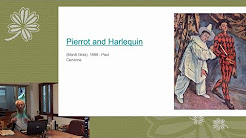
Pablo Picasso, "Pierrot", 1918.
Pierrot by Pablo Picasso
https://www.framedart.com/picasso/pierrot-print-26677.htm
https://www.framedart.com/picasso/pierrot-print-26677.htm


Displays range from an explanation of the different types of clowns and their costumes, to the mini car driven by Chester “Bobo” Barnett, to a travel trunk full of clown shoes, plus countless other costumes, portraits, posters, paintings, and clowning paraphernalia.
ATLASOBSCURA.COM

International Clown Hall of Fame
This circus town museum recognizes the outstanding clowns of history.

Stopping by the Gallery this week? Join us tomorrow, July 24, at 1:00 pm for "Celebrating the East Building: 20th-Century Art Lecture Series."
The East Building opened in 1978 and inaugurated contemporary and modern art collecting at the National Gallery of Art. This summer, explore the highlights of 20th-century art through a series of lectures that illuminate the major movements associated with European and American modern art. Attend all 14 lectures for a course in modern art or join in for as many individual talks as you would like. Each lecture is 60 minutes. Tomorrow's topic is "Early Picasso and Cubism."
Hope to see you! go.usa.gov/xU9Fy
Pablo Picasso, “Family of Saltimbanques,” 1905, oil on canvas, National Gallery of Art, Washington, Chester Dale Collection
Picasso's "Harlequin Head" was one of 7 paintings stolen from Kunsthal Museum in Rotterdam
https://www.ndtv.com/…/missing-pablo-picassos-harlequin-hea…
Pablo Picasso
Pablo Picasso "Harlequin with Violin " https://ru.wahooart.com/@@/8EWN5J-Pablo-Picasso-%D0%90%D1%80%D0%BB%D0%B5%D0%BA%D0%B8%D0%BD-%D1%81-%D0%A1%D0%BA...
貼文 · 1 張相片
Vaudeville clown 2 of 2
American, c. 1870
雜耍表演 a type of entertainment popular chiefly in the US in the early 20th century, featuring a mixture of specialty acts such as burlesque comedy and song and dance.
Their march will take them to the old Town Hall, which has been replaced by ‘The Palace,’ a saloon that features vaudeville acts and dancing girls.
Vaudeville - Wikipedia
https://en.wikipedia.org/wiki/Vaudeville
Vaudeville is a theatrical genre of variety entertainment born in France at the end of the 18th ... A promotional poster for the Sandow Trocadero Vaudevilles (1894), showing dancers, clowns, trapeze artists, costumed dog, singers and ...
---Patricia Southerland Fitch A lovely moment. The sweet clown comforting a sad, lonely, run-away from-home-to-join-the-circus-boy. The circus dog rests his chin on his masters leg to comfort them both. Beautiful Norman Rockwell.
Mahdi Abudi 發文到 The Golden Age Of Illustration
The Runaway - Runaway Boy and Clown, 1922Life magazine cover, June 1, 1922,,Photograph National Museum of American IllustrationAmerican Illustrators Gallery.


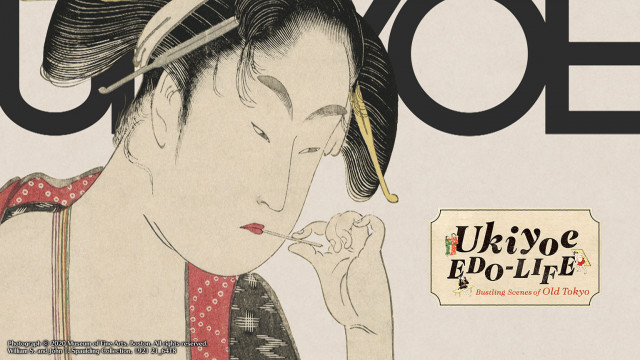

 As goddess of the sun Amaterasu ruled over the entire celestial realm as one of the most important kami – deities in the native Shintō religion.
  Her brother, the storm god Susanoo, was jealous and destroyed her fields and palaces. The grieving Amaterasu retreated to a mountain cave, plunging the world into darkness.
  The other kami gathered to lure the sun goddess out. They found cockerels, whose crowing precedes the dawn, and hung a mirror in front of her cave. See if you can spot the mirror in the upper right of the print!
 The goddess of dance, Amenouzume, lit a bonfire and began to perform. Amenouzume can be seen holding a ‘gohei’ (a wooden wand with paper streamers) and a ‘suzu’ bell tree, both of which are still used in ‘kagura’ Shintō dances today.
 Raucous laughter from the assembled deities encouraged Amaterasu to peak out from the cave and light was thus restored to the world.
 Utagawa Hiroshige (1797–1858), ‘A Musical Performance by the Deities Entices the Divine Radiance’ from the series ‘Illustrated Guide to the History of Japan’. Colour woodblock print on paper, Japan, 1847–52. Read more:
 | HIROSHIGE
 Jusqu'au 29 mai au musée Guimet
 | PLEINE LUNE
 Du 15 février au 29 mai au musée Guimet